Showing posts with label Diuretic. Show all posts

Monday, March 29, 2010

KAPOK (Ceiba pentandra)


Good morning everyone. Another tree with medicinal value found in the Philippines. I’m sure if many have this plant you can use it to cure some ailments. There are a total of 96 Philippine medicinal trees under 83 genera and 38 families. I want to share the most seen trees here.

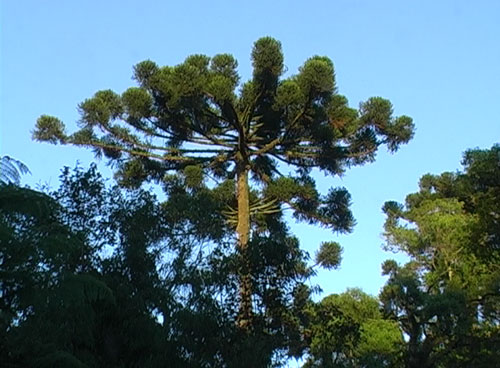
This is an erect, deciduous tree, 15 m high. The trunk is cylindrical, usually bearing scattered, large spines. The branches are in distant whorls, and spread horizontally. The leaves are compound with 5-8 lanceolate leaflets, 6-15 cm long, pointed on both ends.

Medicinal Value:

■ The bark is used as a vomitive and diuretic. It is used to treat ever and diarrhea. It is also applied on wounds and swollen fingers.

■ A decoction of the flowers is used for constipation.

■ An infusion of the leaves is used for cough, hoarseness, intestinal catarrh and urethritis. The tender leaves are administered for gonorrhea.

■ The unripe fruit is regarded as a demulcent (soothing medicine, provides a protective coating on mucus membranes) and astringent.

■ A tender fruit used as emollient.

■ A decoction of the roots is given for chronic dysentery, diarrhea, ascites (abnormal accumulation of serious fluid in the abdominal cavity) and anasarca (edema characterized by accumulation of serum in the connective tissue of the body).

■ The gum is an astringent and useful as a styptic (having a harsh acrid, flavor). It is given with milk as a cooling laxative to children. It is also used for incontinence of urine of children.

Monday, March 22, 2010

CABALLERO (Caesalpinia pulcherrima)


Good morning everyone. Another tree with medicinal value found in the Philippines. I’m sure if many have this plant you can use it to cure some ailments. There are a total of 96 Philippine medicinal trees under 83 genera and 38 families. I want to share the most seen trees here.

It is an erect, small and smooth tree reaching 1.5 to 5 m high. It is armed with scattered spines along the branches. The red and yellow, few flowered clusters are borne on terminal portions.

Medicinal Value:

■ Fresh leaves are applied externally to relieve rheumatism; heated and applied externally, remedy stomach pains.

■ A decoction from the crushed seeds is used as an emetic and believed to be a remedy for dysentery.

■ roots are diuretic and useful in cases of stone formation in the bladder.

■ The juice of the stem and roasted fruit are used for eye disease.

■ The finely powdered leaves are given as uterine tonic to women immediately after giving birth.
Photo courtesy: aves

Thursday, March 11, 2010

AGOHO (Casuarina equisetlifolia L. Cauanrinaceae)

Good morning everyone. I was looking for the date today on my calendar when I saw the design of it. Thought to share this with you. There are trees with medicinal value which you can find in the Philippines. I’m sure if many have this plant you can use it to cure some ailments. There are a total of 96 Philippine medicinal trees under 83 genera and 38 families. I want to share the most seen trees here.

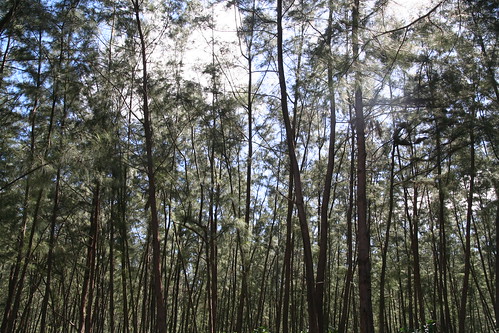
A large evergreen tree, 20 m high, with a 65-cm diameter. The crown is narrowly pyramidal resembling some of the conifers in appearance. The bark is brown to dark brown and rough. The inner bark is light in color and has a bitter taste. The leaves are actually reduced to small sheaths on the needle-like branchlets.

Medicinal Values:

■ A decoction of the bark, when taken in large doses, is used as an emmenagogue (an agent that promotes menstrual discharge) and ecbolic (alleviates menstruation pains). It is helpful for hemoptysis (expectoration of blood from some part of the respiratory tract) and also an excellent astringent.

■ The bark is used to arrest diarrhea and dysentery; it’s lotion used for beriberi; a powder of the bark is prescribed for pimples on the face.

■ An infusion of the bark is used as a tonic.

■ A decoction of the twigs is used as a lotion for swellings; an infusion of the branches is used as a diuretic (an agent that tends to increase the flow of the urine).

■ A the Leaves are used for colic (spasm, obstruction or twisting or abdominal pain).

Photo courtesy: Amrei Dizon