Showing posts with label Astringent. Show all posts

Thursday, April 1, 2010

MAHOGANY (Swietenia macrophylia King Meliaceae)


Good morning everyone. Another tree with medicinal value found in the Philippines. I’m sure if many have this plant you can use it to cure some ailments. There are a total of 96 Philippine medicinal trees under 83 genera and 38 families. I want to share the most seen trees here.


This is a more or less deciduous, erect tree growing up to 10 m or more in height, with a heavy, dark-green, dense crown. It sheds its leaves during summer. The trunk is more or less buttressed. The bark is dark gray and ridged. The leaves are alternate, smooth (with the upper portion shiny, brownish, or purplish), compound and about 15 cm long, comprising 3-6 pairs of leaflets.


Medicinal Value:


■ A decoction of the bark may serve as an antipyretic (reduces fever).


■ it may serve also as an astringent.


■ It is also used as a tonic (increases body tone).

Thursday, March 11, 2010

AGOHO (Casuarina equisetlifolia L. Cauanrinaceae)

Good morning everyone. I was looking for the date today on my calendar when I saw the design of it. Thought to share this with you. There are trees with medicinal value which you can find in the Philippines. I’m sure if many have this plant you can use it to cure some ailments. There are a total of 96 Philippine medicinal trees under 83 genera and 38 families. I want to share the most seen trees here.

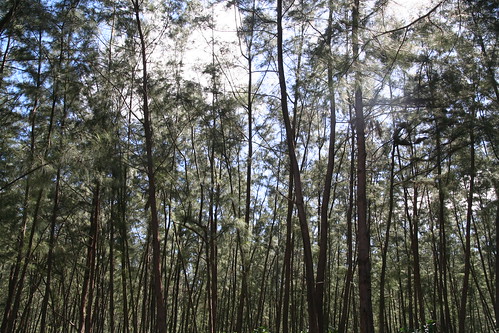
A large evergreen tree, 20 m high, with a 65-cm diameter. The crown is narrowly pyramidal resembling some of the conifers in appearance. The bark is brown to dark brown and rough. The inner bark is light in color and has a bitter taste. The leaves are actually reduced to small sheaths on the needle-like branchlets.

Medicinal Values:

■ A decoction of the bark, when taken in large doses, is used as an emmenagogue (an agent that promotes menstrual discharge) and ecbolic (alleviates menstruation pains). It is helpful for hemoptysis (expectoration of blood from some part of the respiratory tract) and also an excellent astringent.

■ The bark is used to arrest diarrhea and dysentery; it’s lotion used for beriberi; a powder of the bark is prescribed for pimples on the face.

■ An infusion of the bark is used as a tonic.

■ A decoction of the twigs is used as a lotion for swellings; an infusion of the branches is used as a diuretic (an agent that tends to increase the flow of the urine).

■ A the Leaves are used for colic (spasm, obstruction or twisting or abdominal pain).

Photo courtesy: Amrei Dizon